Analogies
The brain needs various „hooks“ 🪝🪝🪝 to make connections and to better understand abstract concepts. Using analogies is one of the ways to make new ideas easier to understand.
Maybe you are not all that experienced with the English tenses. But chances are you know a thing or two about the things from the Quiz. Let’s take a look at them again and see how those everyday items can serve as analogies:
Do you remember learning to drive a car?
Each of the actions you perform while driving is not difficult in isolation – it is coordinating all of them at once what makes it challenging. At first, it makes you feel like you are trying to tame a monster. Using different tenses could feel in a similarly challenging way in the beginning.
However, once we become frequent drivers (users of the language), we stop thinking about those as separate actions, it all comes together naturally.
And remember: rules are mostly good for passing exams – in real life it’s all situation-based.
This reference to navigation apps is useful because it shows the way we can zoom in and out – switching between detailed view and birds-eye view. While learning we have to switch between those two modes too. This something that will come up again and again throughout the course.
We can also chose different routes – there’s usually more than one way to reach a destination. It’s the same with the tenses – there isn’t a single right way to tell a story or approach someone. Grammar is not set in stone.
It’s dynamic.
It’s a choice.
Could you imagine getting a jigsaw puzzle with no idea what image you should create?
We always look at the box cover – get to know the colours, textures and objects – the big picture. We sort the pieces – group similar ones together. Then, we start edges first to gain a sense of the size. Once we frame the picture and begin to restore order upon chaos, the ocean of information starts to make more sense.
Every now and then we look back and compare with the big picture – it’s your reference point, locate details on it, until everything falls into place
Just beware: you can look at the picture on the box from today till tomorrow. But until you begin your search for patterns and connections, you’re no closer to recreating it. Good old-fashioned hard work is the answer.
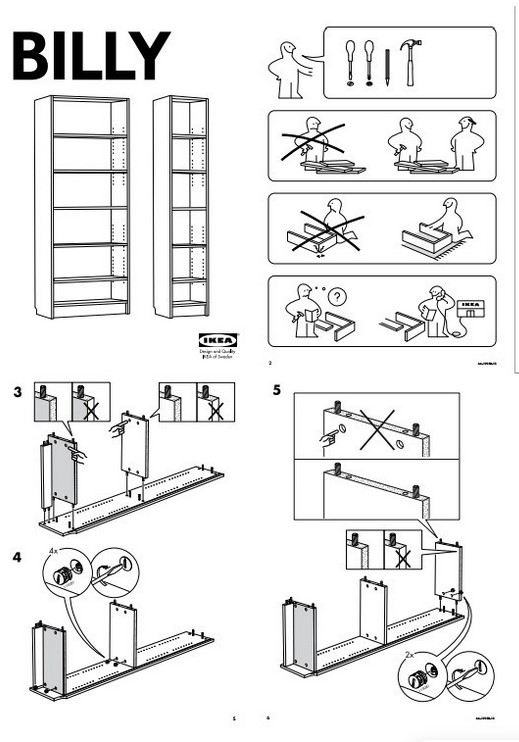
And a final analogy for now:
Something called the IKEA effect: once people experience the power of putting together a piece of furniture themselves, they develop a stronger sense of ownership over it. Research shows that once you build an IKEA piece yourself, you are less likely to say goodbye to it.
In a similar way, when you discover grammar on your own you are more likely to use it with confidence.
Some takeaways:
– The coordination of complex skills takes practice.
– It helps to keep the big picture in mind – it’s your reference point.
– Sort information and look for patterns.
– Make progress one step at a time.
– When you discover/build something yourself you are much more likely to stick to it.