

„More of the same“ = less and less of the desired effect
Could it be that the real problem is not what’s stopping us, but our attachment to the (temporary) solution we’ve come up with?
Could it be that the problem is not the problem, but the solution is?
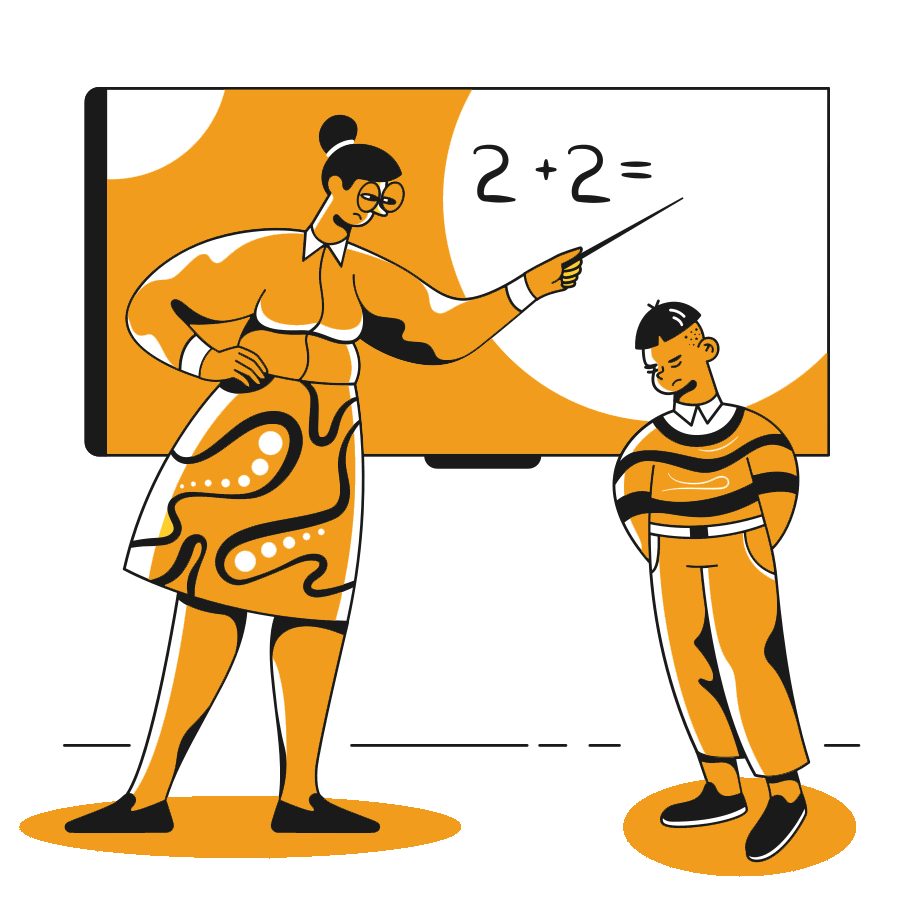
What do we mean by that? Let’s take an example from the business world, where everything is closely monitored because of its immediate financial effects.
It’s been shown that in many cases, the solutions we use to fix a problem can actually make it worse.
For example, in this article, you can read about a training company that made a contract with the U.S. government. Every month, the company had to send detailed reports about the work they had completed. If a report was incomplete, the company wouldn’t get paid for the missing information. If there were mistakes, the reports were sent back, which delayed payments. If the numbers were too high, the company could be accused of fraud.
Mistakes in these reports became a serious problem for the company. To solve it, additional audits were introduced. However, in the long run (over time), this didn’t help. In fact, the number of mistakes continued to rise. What happened was a classic case where the solution created a bigger problem than the original issue.
The more audits were introduced, the less responsible the people preparing the reports felt for making sure the data was correct. As a result, they made even more mistakes. So, even more audits were added, which made the problem worse. In this case, the solution – audits – was actually deepening the problem.
Another example: promotional emails sent by websites and companies where we’ve made purchases. These emails aim to boost sales. The more emails they send, the fewer responses they get. As the responses drop, more emails are sent, making this way of marketing less effective.
There are many examples around us where „doing more of the same“ produces less of the desired effect. This idea is likely true for all of us in some part of our lives.
🔑The key is to figure out where. What are we doing that no longer gives the results we want?
Maybe audits once helped ensure accurate numbers, but eventually, every temporary solution stops working. After that point, the solution starts to make things worse. When this happens, we sometimes need to rethink what we’re doing and make changes. Other times, just doing less or simplifying things is enough.
Burnout is also seen as the result of this „doing more of the same“ logic, where we feel like we must work every free minute because time never feels enough. From an article in psychology we read that using the ‘more of the same’ approach leads to ‘infinite games.’ This happens when people keep repeating the same pattern, and neither side can look at the situation from a new angle and change their approach. In these cases, the role of a therapist is to offer a fresh perspective by suggesting a new ‘recipe’ that’s different from what has already been tried. It’s like what Einstein said: ‘We cannot solve our problems with the same thinking we used when we created them.’
We can apply this principle to learning English (or any other language).
Often, we think there is only one way or method to learn English. As teachers, we also tend to use short-term solutions, and sometimes we stick to them. This leads to repetition. But for language learning and communication skills, variety is very important. We need different situations, scenarios, and contexts to help our minds connect the pieces of the language puzzle. It’s important to participate and bring your own topics to the conversation. Don’t rely too much on the teacher’s guidance or the topics from the textbook.
We need rules and a strong foundation, but more than anything, we need personal experience. As teachers, especially in adult English courses, our goal is to offer a new perspective and give you back the responsibility. We don’t want to do a „disservice“ by taking away your personal responsibility, like in the company example above. We don’t want to turn into your „auditors“ and make you dependent on always needing a teacher.
In conclusion, effective learning isn’t just about following a set path or relying on the same methods over and over. Much like in life, where the same solution can eventually turn into a problem, our approach to learning must evolve. Clinging to old strategies that no longer yield results not only limits our progress but can also create frustration and burnout.
Only by moving away from the “more of the same” approach, embracing change, and staying open to new possibilities can we achieve lasting, meaningful progress in learning a language—or in any other area of life.